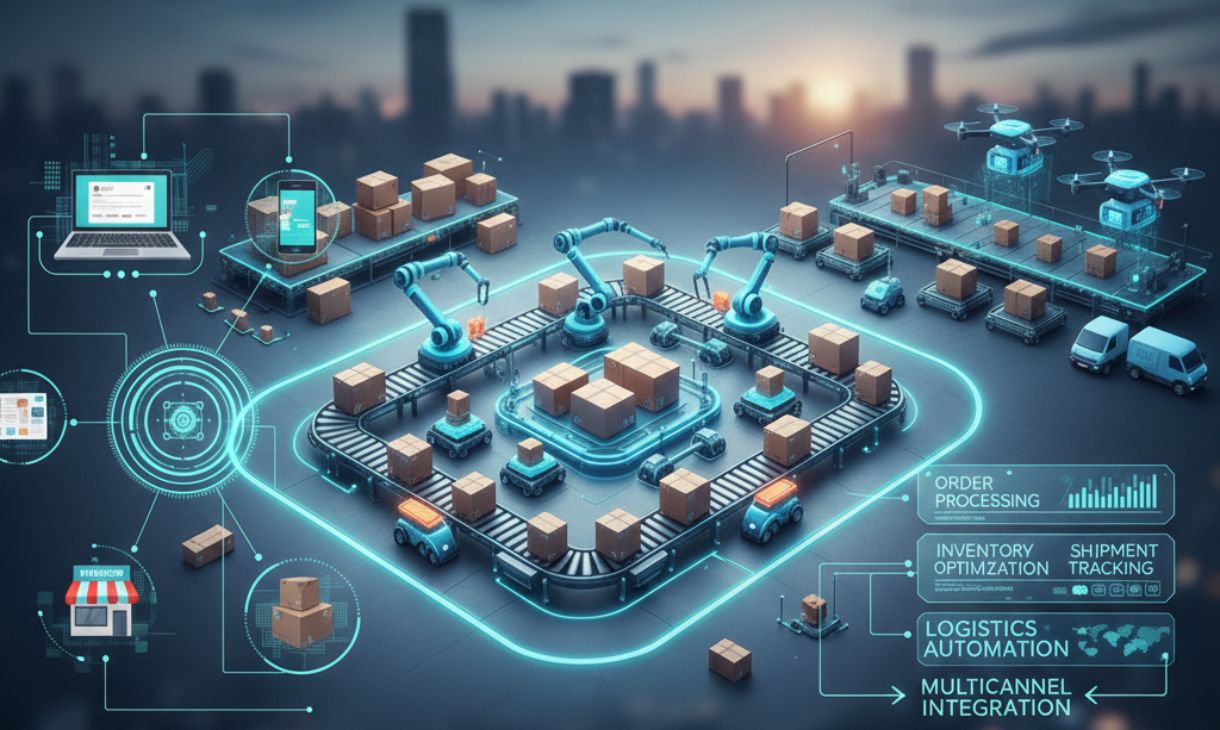
Logistics integration and shipment automation in multi-channel models
In a mature multi-channel strategy, the sale does not end with payment.
The real test of a digital ecosystem is what happens after: order preparation, choice of courier, shipping, tracking, exception management.
When a company sells on multiple channels - proprietary eCommerce, marketplaces, physical stores, B2B - logistics quickly becomes one of the points of greatest complexity.
And it is precisely here that integration and automation make the difference.
Why logistics is the bottleneck of multichannel
Many multichannel projects work well until checkout.
Then problems start:

orders coming from different channels

separate shipping flows

courier portals to manage one by one

unaligned tracking

manual errors in preparation

customers who ask “Where is my order? ”
Without central logistics integration, every new sales channel multiplies operational work, instead of increasing efficiency.
The wrong logic: one logistics for each channel
The correct model: logistics as a central node
How logistic integration works in practice
In an integrated architecture, the typical flow is as follows:

Multichannel order collection
Orders come from eCommerce, marketplace or B2B channels and are centralized.

Normalization of order
Regardless of the source, the order is transformed into a unique format:
- customer data
- address
- Articles
- notes
- Shipping mode

Choice of courier according to rules
The selection of the carrier can depend on:
- destination
- weight or volume
- order value
- sales channel
- Trade agreements

Automatic label generation
No portals, no copy-paste: the label is created directly from the system.

Sending tracking
Tracking comes:
- registered
- sent to the sales channel
- communicated to the customer

Order status update
All systems remain aligned: eCommerce, marketplace, management.
Automation of shipments: not only speed
Automating shipments doesn't just take time.
Serves to:

drastically reduce errors

guarantee traceability

improve customer experience

respect SLA of marketplaces

make the model scalable
In multichannel contexts, automated logistics is a necessary condition, not an option.
Logistics and customer trust