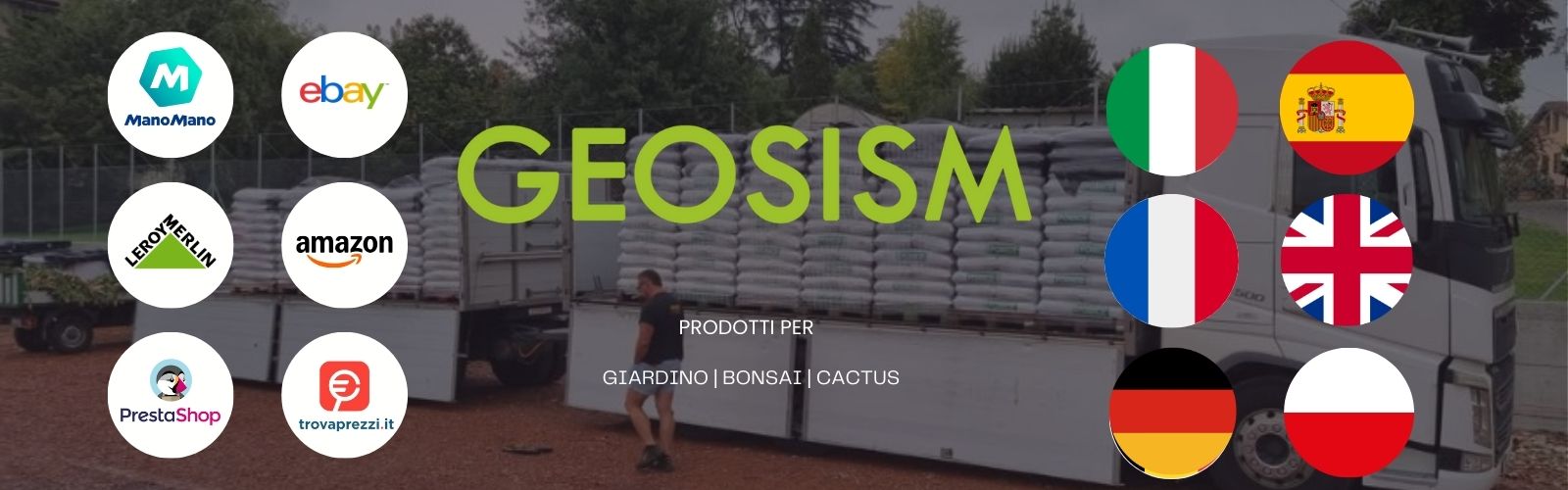
Geosism: Managing a Complex Catalogue and Selling Omnichannel Across Europe
Geosism is a unique reality in the European panorama of specialized distribution.
The company operates in many vertical sectors - cactus, bonsai, gardening, orchids, carnivorous plants, aquarium and vegetable garden - and has become a reference point for years professionals, enthusiasts and retailers.
The company's guide Simone Barani, geologist and owner, who has built an extremely wide assortment but at the same time highly specialized, able to meet very different needs.
A complex challenge: very wide catalogue and high specialization
The main distinguishing element of Geosism is depth of the catalogue, which is not limited to a few categories, but covers a complete ecosystem of care and cultivation products.
The catalogue includes:
- professional accessories and equipment (instruments for bonsai, wires, networks, analysis tools)
- oriental garden furniture (stones, lanterns and decorative elements)
- technical products (solid fertilizers, liquids and hydrosoluble, micorrize, plant protection)
- packaging and containers (grain, inerts, pallets and plastic containers)
- plants, with a direct selection of bonsai and cactus
- soils and substrates of all types
- vessels, from plastic to resin to one of the largest collection of bonsai vases in Europe
A complexity of this type requires solid and highly automated digital processes, especially when the catalogue is distributed on several sales channels.
E-commerce as a hub of business
Online sale is a central pillar of the business model Geosism.
E-commerce is based on PrestaShop, configured in multilingual mode to support international growth.
The store is available in Italian, German, French, Spanish, Polish and English. This approach allows Geosism to preside over multiple European markets while maintaining a consistent and localized purchasing experience.
In depth: How to choose the right CMS for an e-commerce with complex catalogs
Sales omnichannel and international marketplaces
Next to the direct store, Geosism adopts an omnichannel strategy, alongside the e-commerce owner a strong presence on the marketplaces.
The company sells on:
- Amazon
(Italy, Germany, France, Spain, Belgium, Netherlands) - eBay UK
- Leroy Merlin
- ManoMano
- Find prices
This multichannel presence allows to intercept different publics, from professional to final customer, maintaining high visibility of the catalog.
In depth: omnichannel strategy: how to integrate online store and marketplaces
Dynamic prices and competitiveness on marketplaces
In a highly competitive marketplaces context, Geosism uses dynamic pricing strategies for shared brand products, maintaining a balance between competitiveness and marginality.
For its own branded products - such as fertilizers, inerts and equipment developed internally - the company operates instead as manufacturer and distributor, being able to manage the price in a direct and stable way. This differentiated approach allows for stay competitive on marketplaces, value the proprietary products and preserve the margins.
Automation of flows and operational management
One of the key elements of the Geosism case is strong automation of flows.
All orders from different channels:
- e-commerce direct
- international marketplaces
are coming automatically collected, sent to the management system and to the central warehouse, where Geosism internally manages the preparation and shipment.
The absence of manual operations reduces errors, management times and operating costs.
In depth: ERP and e-commerce: why a management is fundamental in an omnichannel strategy
The results
Thanks to this digital structure, Geosism managed to:
- manage an extremely wide catalogue without duplication
- maintain synchronized all sales channels
- expand effectively at European level
- compete on high competition marketplaces
- optimize time and cost thanks to automation
Conclusion
The Geosism case demonstrates how a highly specialized vertical e-commerce can grow sustainably only through structured digital processes, a omnichannel conscious strategy and a strong operational automation.
A concrete example of how complexity - if well governed - can become a competitive advantage in digital commerce.
Amazon, eBay, PrestaShop, Leroy Merlin, ManoMano, TrovaPrezzi