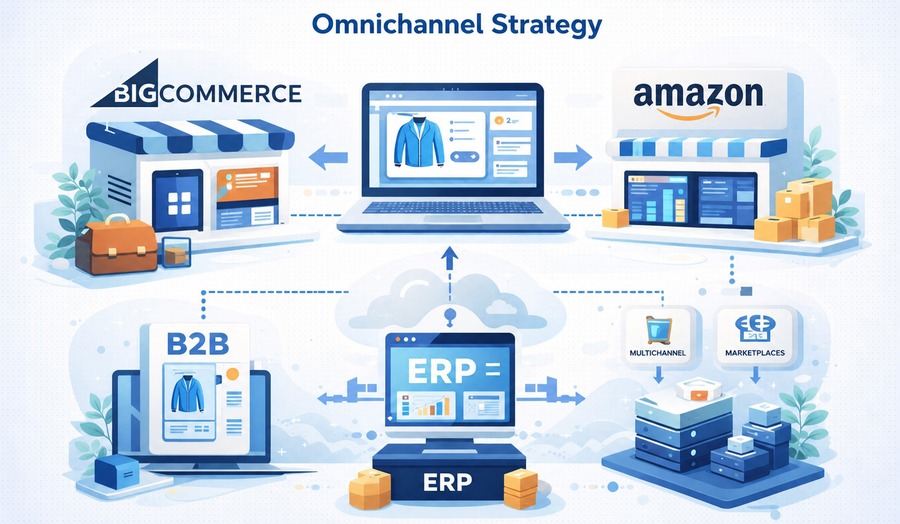
Omnichannel Strategy: How to Integrate Online Sales and Marketplaces
In recent years the term omnichannel became central in digital commerce.
However, it is often used in a generic way, confusing it with the simple presence on multiple channels.
Actually, one omnichannel strategy It's not just about where you sell, but how the channels dialogue with each other and how the company governs sales processes consistently.
Before arriving at an omnichannel model, many companies start from a strategy multichannel sale, managing eCommerce site, marketplaces, catalog, stock, prices and orders on multiple platforms.
To better clarify the two models, you can also read the comparison between multichannel and omnichannel sale, with operational differences, advantages and practical examples.
What is really an omnichannel strategy
An omnichannel strategy is a sales model in which:
- online store
- marketplaces
- B2B channels
- physical retail
do not work as separate silos, but as parts of a single coordinated ecosystem.
The goal is not to be everywhere, but:
- offer a customer-friendly experience
- maintain operational control
- avoid duplication and internal inefficiencies
Multichannel vs omnichannel
It is important to distinguish between:
Multichannel
- more active channels
- often separate management
- stocks and orders not always aligned
- greater operational complexity
Omnichannel
- coordinated channels
- centralized data
- shared processes
- increased scalability over time
Many projects start as a multichannel, but only one part really evolves in omnichannel.
Why the omnichannel has become necessary
The omnichannel is not a fashion, but a response to concrete needs:
- customers buy on different channels
- marketplaces intercept new question
- D2C strengthens the relationship with the brand
- B2B requires dedicated processes
Without an omnichannel strategy, the growth of channels often leads to:
- stock disalignments
- errors in orders
- manual processes
- control difficulties
The pillars of an effective omnichannel strategy
A sustainable omnichannel strategy is based on some key elements.
1. Clear wheels between systems
Each tool must have a precise function:
- I do. e-commerce store manages direct sales experience
- I marketplaces expand commercial coverage
- the management (ERP) governs orders, stocks and processes
Overlaying roles is one of the main causes of complexity.
2. Centralized data
Orders, availability and graphics must have:
- a unique source
- clear update rules
- controlled flows
Without centralized data, the omnichannel quickly becomes unmanageable.
3. Independent but coordinated channels
Each channel must be able to:
- grow
- be optimized
- be replaced
without risking the whole system.
This approach makes architecture flexible and resilient.
4. Integration as a strategic element
In structured omnichannel projects, integration is not a technical detail, but a strategic factor.
It is the integration that allows:
- coordinate flows
- normalize data
- maintain control over time
Omnichannel and e-commerce platforms
Modern e-commerce platforms, such as BigCommerce, Prestashop, Shopify, WooCommerce, they are designed to fit into omnichannel architectures, but do not replace ERP or integration systems.
Their role is:
- manage the direct sales channel
- offer performance and stability
- integrate with the corporate ecosystem
In depth: BigCommerce: when and why choose it for an e-commerce project
In depth: Shopify, PrestaShop or WooCommerce? Why integration is more important than the platform
When adopting an omnichannel strategy
The omnichannel becomes fundamental when:
- increase sales channels
- increase the volume of orders
- marketplaces come into play
- digital becomes strategic
- needs control and scalability
In these contexts, continuing with a “silos” management means accumulating operational debt.
The integration of business systems also allows you to activate advanced tools of automated assistance. The AI voice agents for customer service can consult customer data, orders, shipments and operational requests, offering more accurate and up-to-date answers.
Conclusion
An effective omnichannel strategy is not born from the addition of new channels, but from the governance of the sales ecosystem.
Properly integrate online store, marketplaces and ERP allows you to:
- grow sustainably
- maintain operational control
- improve customer experience
- prepare the company for future developments
The omnichannel is not a point of arrival, but an organizational and technological model on which to build digital commerce over time.
Shopify, PrestaShop, WooCommerce, BigCommerce, ERP, eCommerce, Omnichannel, Marketplace