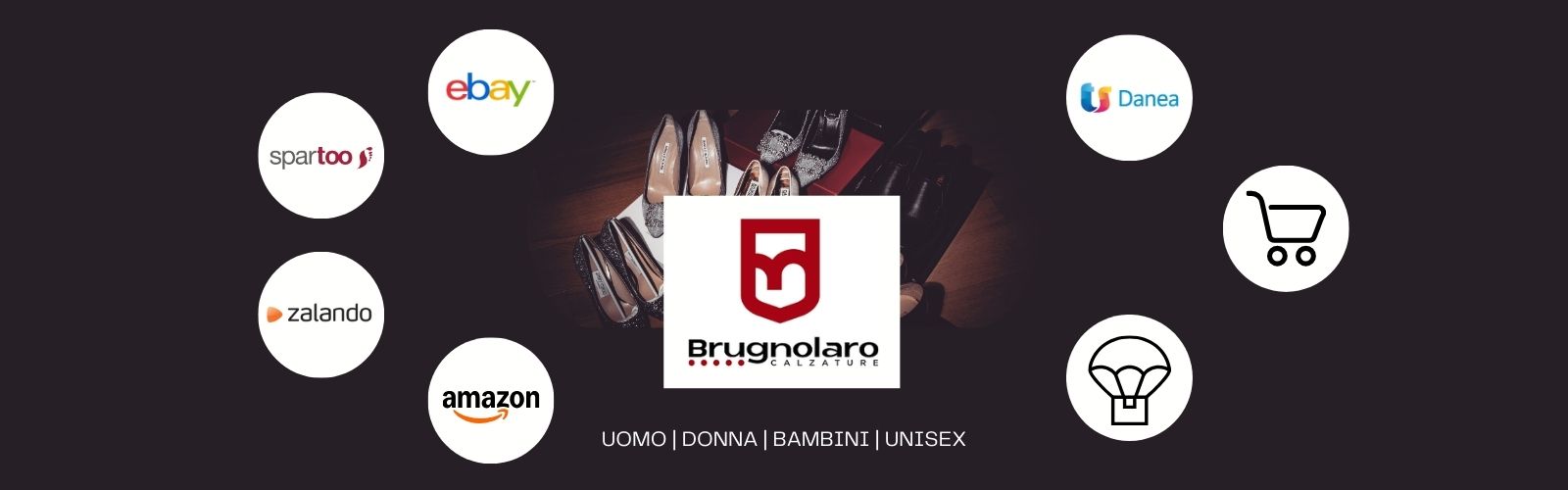
Brugnolaro Calzature: more than 10 years of multichannel e-commerce and automation in fashion retail
In the footwear sector, characterized by seasonality, product variants and strong online competition, building a sustainable e-commerce strategy requires solid processes and reliable integrations.
The case Brugnolaro Calzature represents a concrete example of how gradual growth, accompanied by automation and multichannel vision, can transform online sales into a long-term strategic asset.
An e-commerce route started over ten years ago
The Brugnolaro Calzature e-commerce project takes shape in 2014, when the company decides to structure its online presence more organized.
The goal was not only “to sell on the web”, but create an integrated ecosystem able to grow over time.
Since then, the project has evolved constantly, adapting itself:
- to increase the catalogue
- to the growth of sales channels
- at the entrance to the main European marketplaces
The e-commerce site as the first pillar
The first step was the development of the official e-commerce site @@PROT0@@, designed to enhance a typically complex catalogue such as footwear, characterized by:
- strong seasonality
- numerous variants (cuts, colours)
- collections that change quickly
The site becomes the Direct reference channel, but not the only point of sale.
A structured multichannel sales strategy
Over time, Brugnolaro Calzature has extended its presence on the main fashion and generalist markets, including:
Manage these channels manually would be impractical.
For this reason, the entire ecosystem is coordinated through an integration platform that allows you to centralize data, rules and operating flows.
In depth: omnichannel strategy: how to integrate online sales and marketplaces
Integration with management and physical store
Brugnolaro is not only e-commerce: the company also operates with a physical shop, equipped with warehouse and administrative management based on Danea Easyfatt.
The integrated system allows you to manage continuously:
- price lists
- stock availability
- analyzing product
data such as:
- normalized
- enriched by online
- automatically distributed on site and marketplaces
In this way, management remains the operational control point, while sales channels receive consistent and up-to-date information.
Dropshipping in fashion: a complex model to automate
A significant part of the Brugnolaro catalogue is managed in dropshipping, a particularly delicate model in the footwear sector.
The automated flow covers the entire life cycle of the product and order:
Automation as growth lever
Over the years, automation has allowed Brugnolaro Calzature to:
- manage a wide and variable catalogue
- reduce operational errors
- maintain consistency between channels
- scale online sale without proportionally increasing complexity
An approach that demonstrates how, in fashion retail, technology is a strategic enabler, not just an operating tool.
Continuous evolution and future prospects
The e-commerce project of Brugnolaro Calzature is still evolving.
Among the development guidelines:
- extension of the catalogue
- growth in international marketplaces
- further process automation
- development of a new site based on Shopify
A path that reflects a long-term vision, based on integration, data and scalability.
Conclusion
The case Brugnolaro Calzature shows how a successful e-commerce project in fashion does not hide from a single platform, but from:
- integration between systems
- Automation of flows
- Consistent multichannel strategy
- ability to evolve over time
A concrete example of how e-commerce can become a structural pillar of business, also in complex and highly competitive sectors.
Amazon, eBay, Zalando, Decathlon, ERP, Danea Easyfatt, Dropshipping